
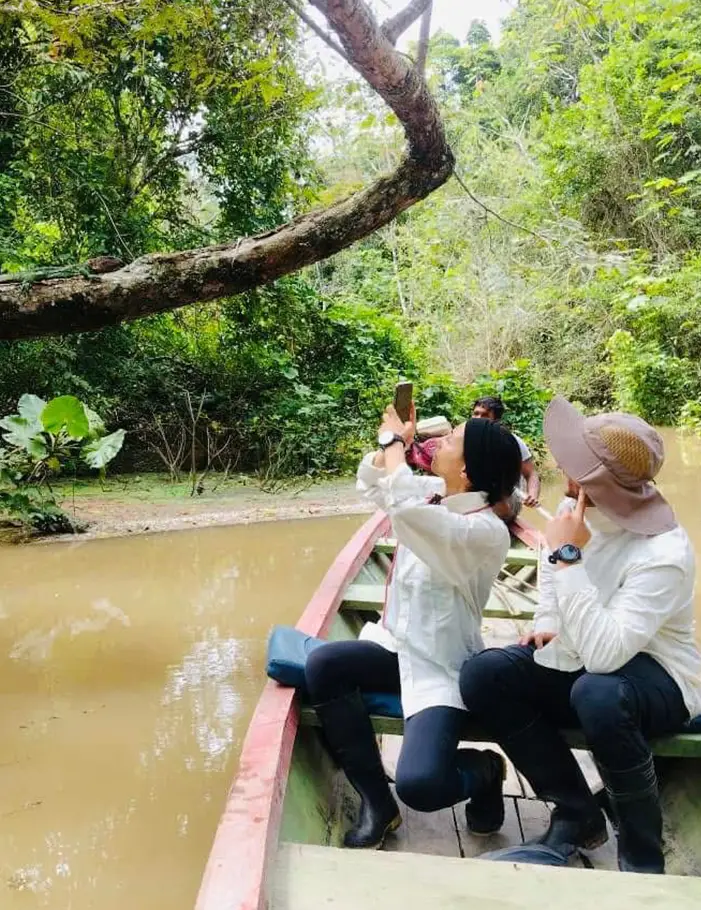
Pacaya Samiria Full Day — the Reserve in One Day
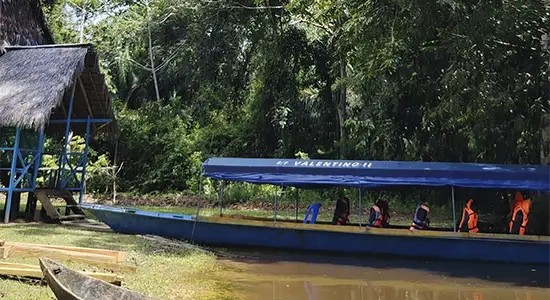
The Pacaya Samiria full day tour leaves your hotel at 8:00 a.m., crosses by road to Nauta — 115 kilometers, one hour and forty-five minutes — and sails the Marañón toward Ucamara, the confluence with the Ucayali where the Amazon River is born and the pink dolphins gather.
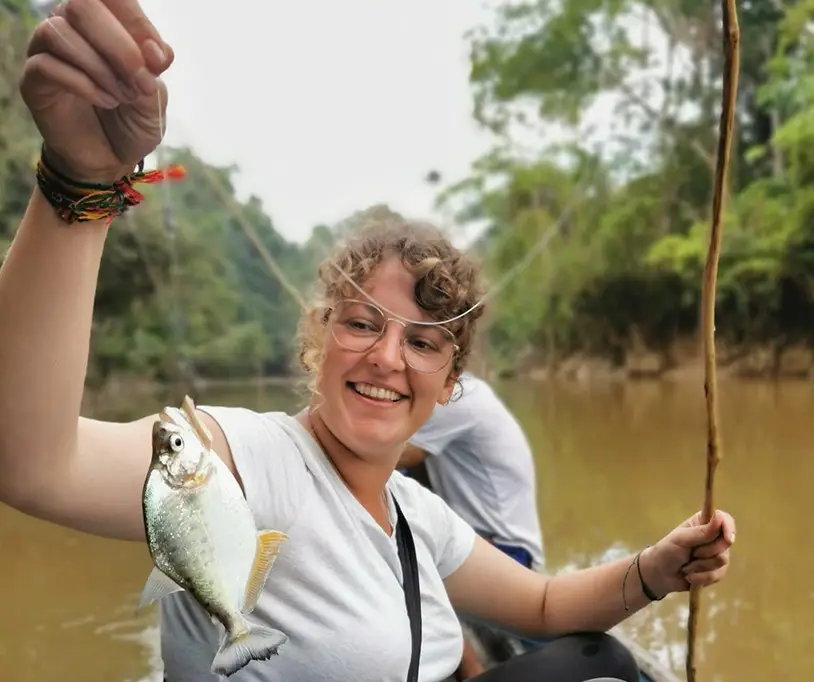
It includes a swim in the blackwater of the Yarapa River, an Amazonian lunch served on board, traditional piranha fishing, primate watching along flooded-forest channels and an exploration of giant trees. Back in Iquitos around 7:00 in the evening.
It is the shortest of our Pacaya Samiria tours and the option for one free day. Transfers, reserve permits and a bilingual guide come included. Price by date and passenger count: write to us and it closes the same day.
4-Day, 3-Night Tour — the Victoria Regia Program
The Pacaya Samiria 4-day, 3-night tour is this branch's full expedition and the most complete of our Pacaya Samiria tours. Three nights at the Dolphin Lodge and one camping night deep in the jungle, with the complete equipment provided by us.
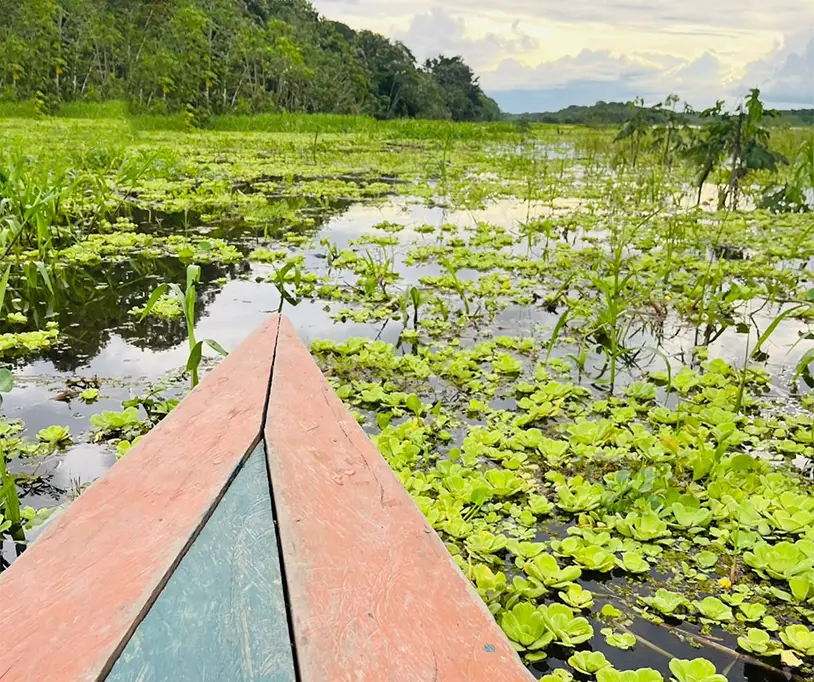
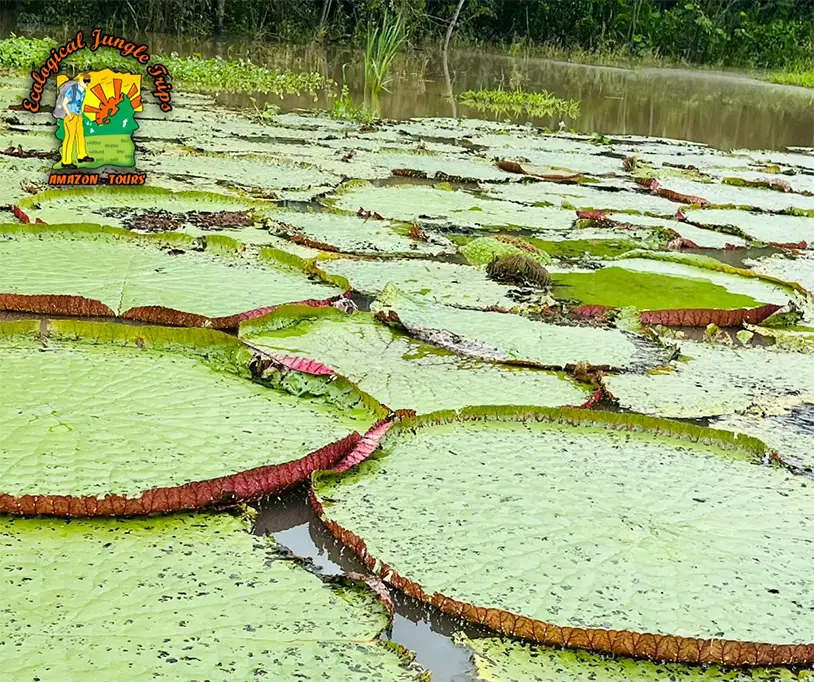
It covers dolphin watching, piranha fishing, day and night walks through primary rainforest, specialized birdwatching at dawn, visits to riverside communities and the navigation to the remote lagoons where the Victoria amazonica grows, its circular leaves reaching several meters across.
2025-2026 price: 430 dollars per person in groups of 2 to 10 passengers, and 655 dollars for a solo traveler. All-inclusive from the Iquitos airport, reserve permits comprised.
Private, Family and Tailor-Made Departures
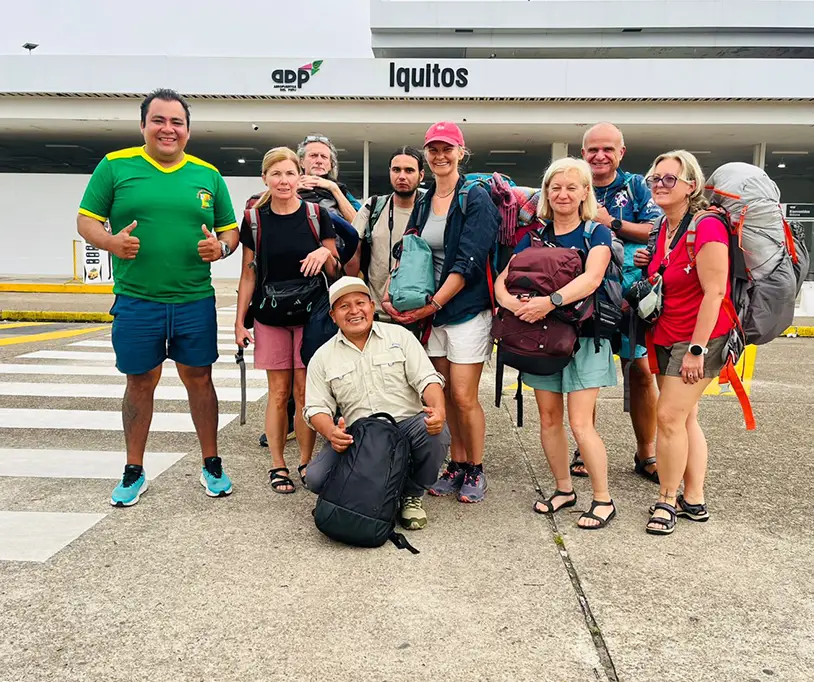
Either program can run in exclusive mode. The private tour reserves the guide and boat only for your group, departing any day of the year. It is the usual pick for nature photographers and birdwatchers, whose timings differ from a mixed group's.
The family tour adapts excursions by age and welcomes children from five years old. The couples tour adjusts the pace and arranges private sunrise outings. And the custom tour is built from scratch on your interests.
No mode changes the reserve or the permits: what changes is the group size, the departure calendar and the guide's focus.
How to Combine Pacaya Samiria with the Amazon River Route
With more than a week in Loreto, the catalog's two branches complement each other well. A frequent combination starts with the 3-day program on the Yarapa and closes with the Pacaya Samiria full day, adding formal reserve entry without repeating activities.
Another option, for maximum immersion, chains the 4-day program with camping to the 5-day one on the Yarapa. That makes nine days in the Amazon with two different bases and no itinerary overlap.
Tell us how many days you have and we propose the combination that uses them best. Prefer comparing the whole catalog first? It lives in our ranking of tours in Iquitos.
Lagoons and Inner Lakes — the Heart of the Reserve
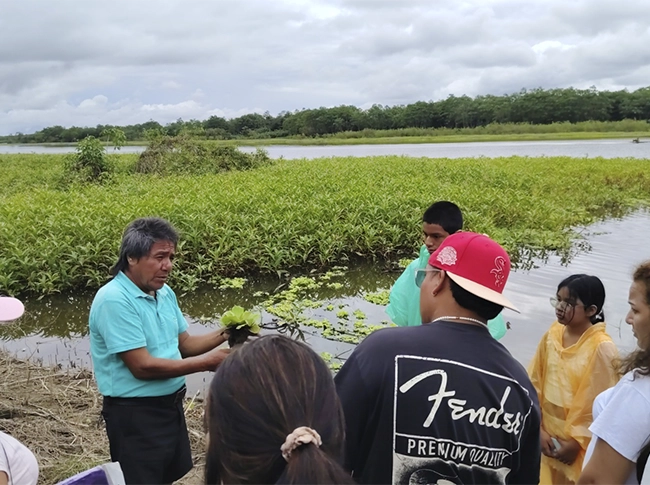
The cochas are horseshoe-shaped lakes born from abandoned river meanders. During low water they cut off from the main course and concentrate a density of fish that draws everything else: herons, caimans, giant otters and dolphins that enter with the flood and stay trapped until the next rise.
They are the environment where the Victoria amazonica grows and where wildlife watching on these tours reaches its highest density. Reaching the remote lagoons takes several days of navigation: it is the main reason the 4-day program sees species the full day never reaches.
Várzea Flooded Forest — the Jungle That Goes Under
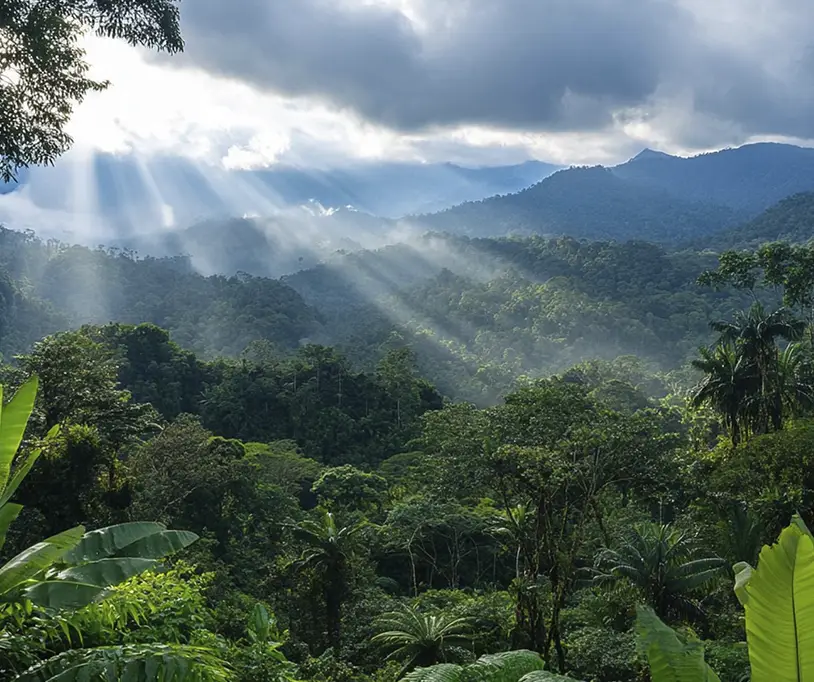
Várzea is forest flooded by whitewater, loaded with Andean sediment and nutrients. It is Pacaya Samiria's dominant ecosystem and the most productive of the whole basin: the silt each flood leaves behind fertilizes the soil year after year.
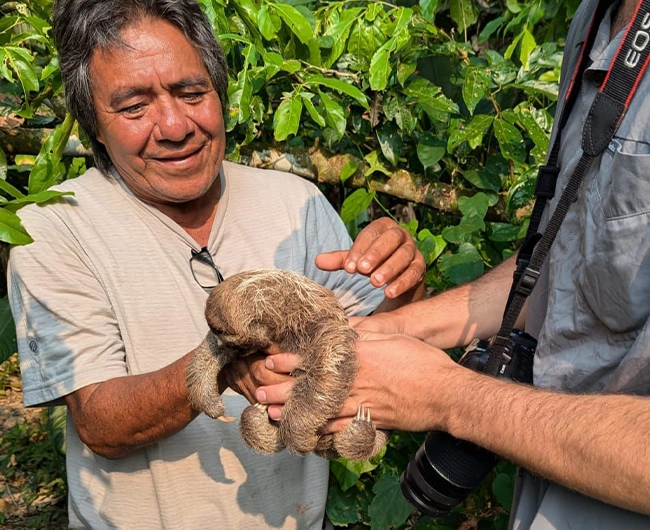
During high water the boat sails between trunks and branches, several meters above the forest floor. Here live the primates that never touch the ground, the sloths and a good share of the 449 bird species recorded in the reserve.
Aguajales — the Flooded Palm Swamps
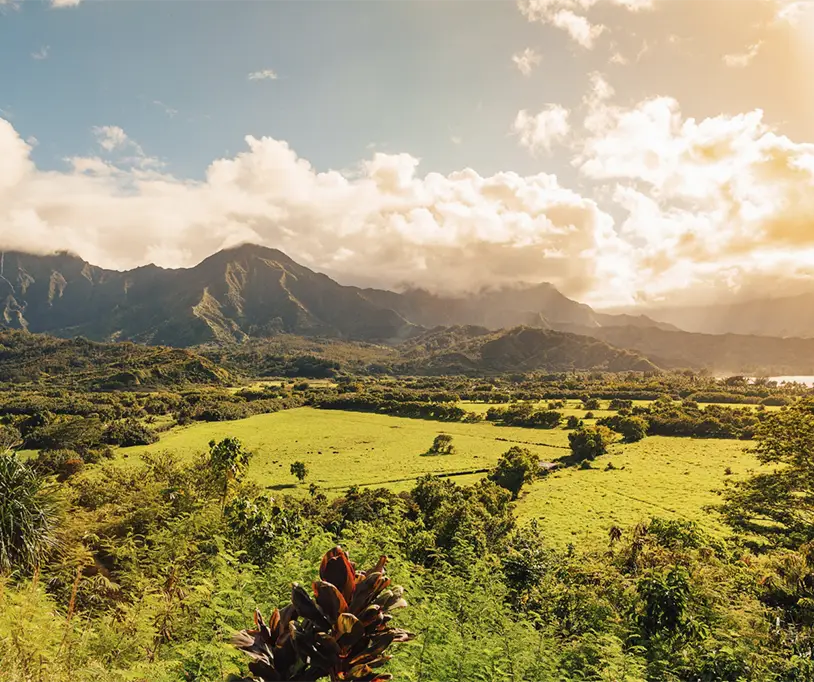
Aguajales are formations dominated by the aguaje palm, which grows with its roots permanently submerged in swampy ground. They are a key ecosystem within Pacaya Samiria and the pantry for much of its wildlife: the aguaje fruit feeds macaws, tapirs, primates and fish.
For the riverside communities they are also a central economic resource, harvested under management plans. Watching them from the boat, with the macaws flying in at dusk, ranks among the most surprising moments of any of the visits to Pacaya Samiria.
The Pacaya and Samiria Rivers — the Reserve's Namesakes
The reserve takes its name from the two rivers running through it, both born inside it, in the great inner basin formed between the Marañón and the Ucayali. Their waters run darker and calmer than the big rivers', and access to them is regulated by zoning.
Our departures sail the Marañón and the Ucayali, enter the system's channels and lagoons and operate on the Yarapa River, in the buffer zone. The strict-protection zones of the Pacaya and Samiria rivers are not open to tourism, and no serious operator will offer you an overnight stay in them.
Group Rate for 2 to 10 Passengers — the Standard Option
It is the path most bookings take. The per-person rate is identical whether you are two or ten, and we never exceed ten passengers per group, whatever the demand. That ceiling lets small boats enter the flooded forest's narrow channels without scattering the wildlife.
2025-2026 rates per person, all-inclusive from the Iquitos airport: 430 dollars for the 4-day, 3-night program with camping and the Victoria Regia. The full day is quoted by date and passenger count, because its cost structure differs: no lodging or full board comes into it.
To book Pacaya Samiria tours, a 10% deposit of the total is all it takes. The balance is paid at our Iquitos office before departure, in cash or by card. Reduced rates apply from four passengers on the one-day program.
Solo Traveler Rate — Depart Without Waiting for a Group
Traveling to the Amazon alone is far more common than people assume, and it should not force you to wait for someone else to book your same dates. We run the program anyway, with a dedicated guide and boat, even if you are the only passenger. The rate reflects that real operating cost: moving a boat, a guide and processing the permits costs the same with one as with five.
2025-2026 rate for one passenger: 655 dollars for the 4-day, 3-night program. If another traveler joins by the time the date closes, we tell you before the deposit so you take the group rate.
Every rate on this page is expressed in US dollars per person for the 2025-2026 season. All include the reserve's entry tickets, get confirmed in writing before the deposit and carry no supplements on arrival in Iquitos.
Pink Dolphin and Gray Dolphin
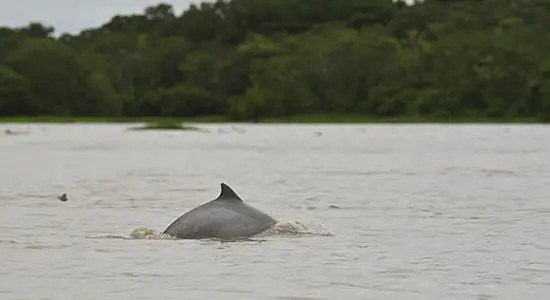
The pink dolphin (Inia geoffrensis) and the gray dolphin (Sotalia fluviatilis) gather at the Ucamara confluence, where nutrients draw the fish shoals, and in the lagoons connected to the main course. Both programs sight them, with very high frequency. Watching happens from the boat: swimming with dolphins is not included, because it stresses a vulnerable species and runs against conservation recommendations.
Victoria Regia — the Giant Water Lily
The Victoria amazonica, known locally as Victoria Regia, is the reserve's botanical emblem. Its circular leaves reach several meters across, and its white flowers turn pink on the second day of blooming. It grows in lagoons far from the conventional routes, so it appears only on programs of four days or more: it is the central differentiator of the Victoria Regia program.
Paiche and Freshwater Fish
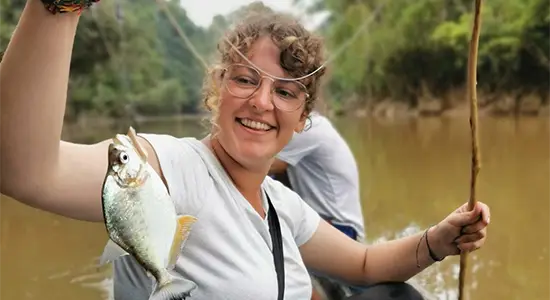
The reserve holds 256 freshwater fish species. Most emblematic is the paiche or arapaima, South America's largest freshwater fish, which breathes air and surfaces at regular intervals. Traditional rod fishing usually lands piranhas, tucunaré, catfish, bujurquis, acarahuazú and sardines.
Giant River Otter and Amazonian Manatee
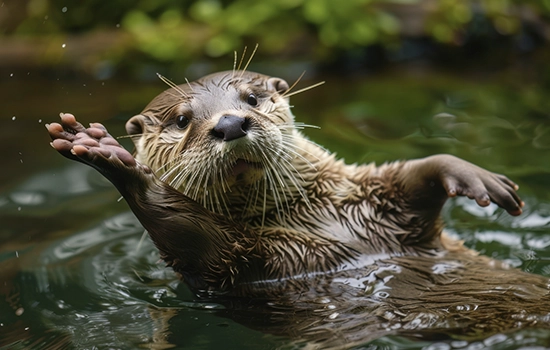
Two of the Amazon's most threatened and charismatic species. The giant otter (Pteronura brasiliensis) is sighted occasionally in the calmest, most remote lagoons, almost always on long programs. The Amazonian manatee (Trichechus inunguis) is more elusive still, and seeing one in the wild is exceptional. Neither is predictable — and anyone guaranteeing them is exaggerating.
Black Caiman and Nocturnal Reptiles
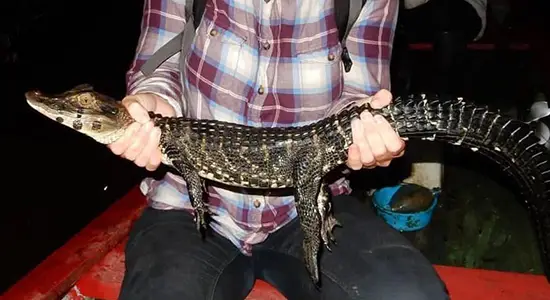
The black caiman is the reserve's top predator and one of the species Pacaya Samiria has helped recover. It is searched for on the night outings by flashlight: the eyes reflect the beam and give away its position on the bank. White caimans, boas, anacondas, charapa and taricaya turtles and an enormous diversity of frogs appear too.
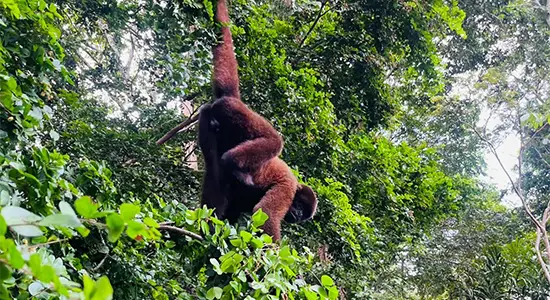
Thirteen Primate Species
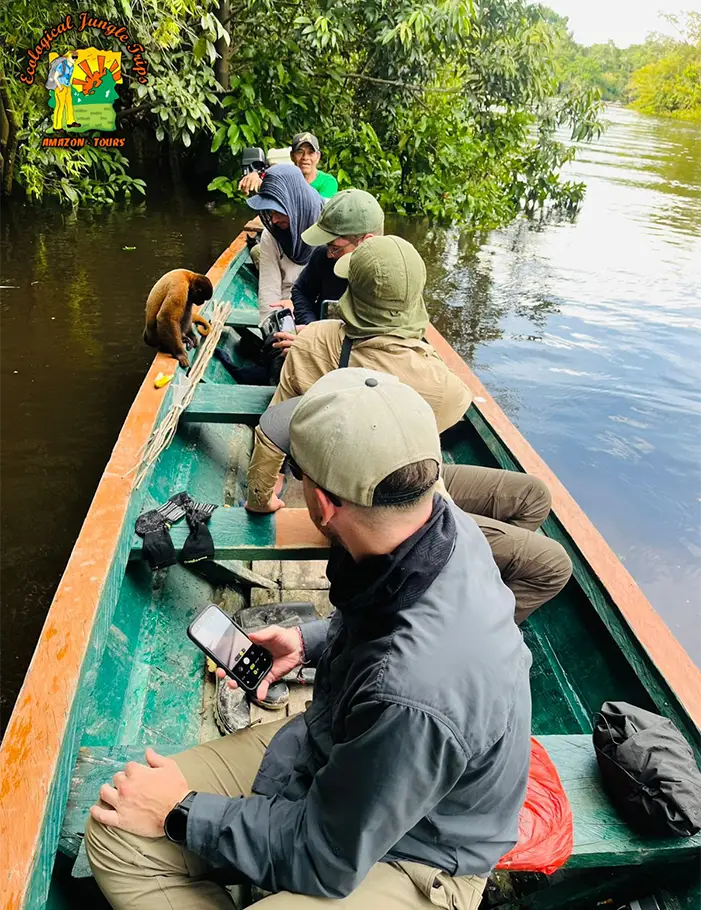
Howler monkeys, capuchins, squirrel monkeys, tamarins and the tiny pygmy marmoset (Cebuella pygmaea), the world's smallest primate. They show on the primary rainforest walks and, above all, sailing the flooded forest's channels first thing in the morning, when canopy activity peaks.
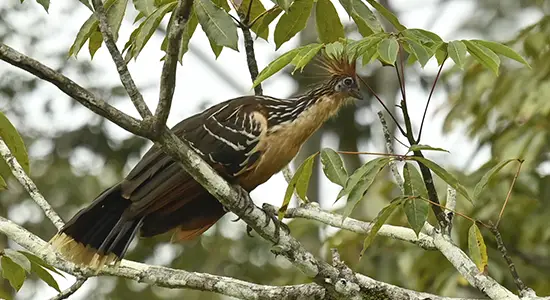
Four Hundred Forty-Nine Bird Species
Birdwatching in Pacaya Samiria is first-rate. Regulars include the hoatzin (Opisthocomus hoazin), the scarlet macaw (Ara macao), the blue-and-yellow macaw (Ara ararauna), toucans, kingfishers, herons, jacanas, horned screamers and Amazonian tinamous. Dawn navigation is the day's most diverse window. Bring binoculars if serious watching interests you.

Entry Tickets and Permits
Every entry to the reserve requires a ticket and an authorization. On our programs they come inside the rate and we process them before departure. If an operator quotes you cheap and later mentions a separate payment “at the checkpoint”, the real price was never the one you were given.
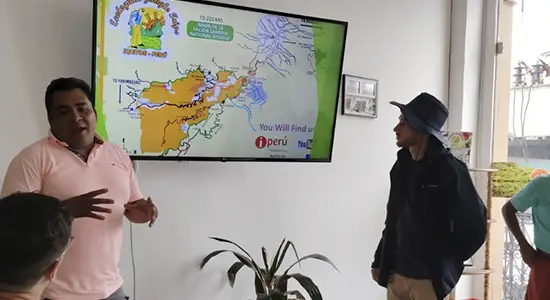
An Authorized Guide, Mandatory
Roaming the reserve independently is not possible. These tours must run with an authorized guide, a requirement that exists for safety as much as for conservation. Our guides are official, bilingual and born in the area's riverside communities.
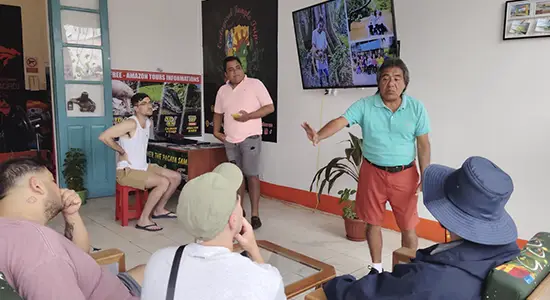
Zoning: Where You Can Go — and Where You Can't
The reserve divides into zones with different protection levels. Tourism operates in the authorized areas; strict-protection zones stay closed. Our lodge sits in the buffer zone, which is where the regulations allow lodging.
Wildlife Observation Rules
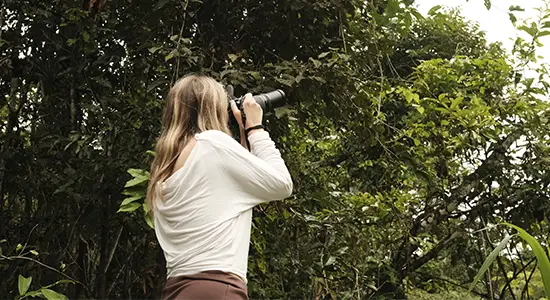
SERNANP sets minimum observation distances, noise limits and navigation routes. In practice that means no chasing dolphins, no feeding animals, no collecting plants and no touching wild fauna. Our guides apply it without exceptions, however insistent the request.

Medical Preparation and Vaccination
The excursions take place in zones that are not endemic for malaria, dengue or yellow fever. Even so, the yellow fever vaccine is recommended at least ten days before the trip, and can be applied at the National Institute of Health. Tell us about any health condition or dietary restriction when booking.
Luggage and What to Pack
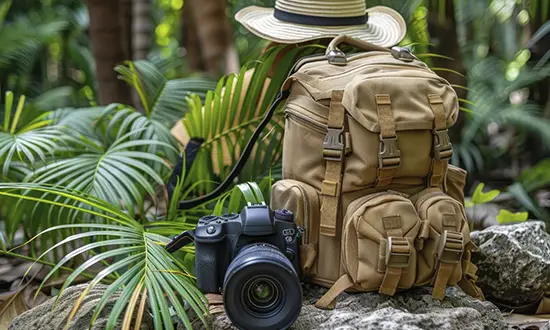
Light long-sleeved clothing in neutral colors, rubber boots — we provide them —, 50% DEET repellent, SPF 50+ sunscreen, a headlamp, a rain poncho and binoculars. Whatever luggage you do not need stays in free storage at our Iquitos office. The full list lives in what to pack for the Iquitos jungle.
Versus the Unprotected Jungle Close to Iquitos
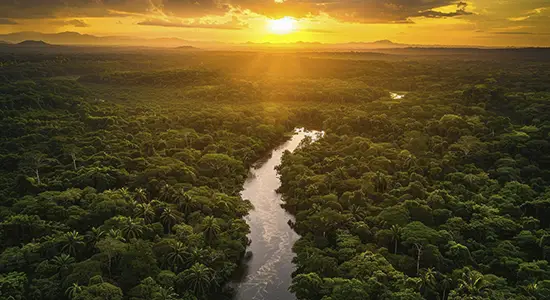
Lodges exist one hour of navigation from the city, outside any protected area. Comfortable and cheap — but they are not Pacaya Samiria: tourist pressure concentrates there and the wildlife has turned elusive. Pacaya Samiria is regulated, has access control and an enormous surface across which tourism spreads.
Versus Tambopata and Manu
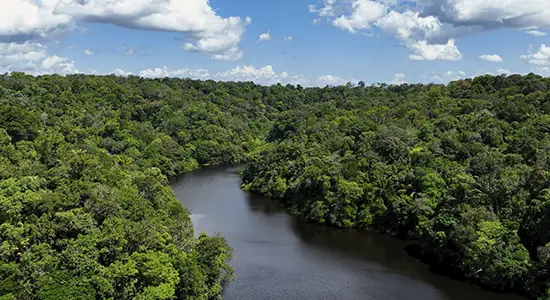
The southern Peruvian reserves, reached from Puerto Maldonado or Cusco, are terra firme forest: they do not flood. They offer macaw clay licks and a different terrestrial fauna. Pacaya Samiria is flooded forest, and that changes the experience completely: here almost everything is traveled by boat, even inside the forest.
Compared with Amazon River Cruises
Amazon cruises offer high comfort and continuous navigation, with short outings in auxiliary boats. A valid option when comfort comes first. The difference is that you sleep on the ship, the walks stay necessarily brief and the cost multiplies several times over.
Versus the Amazon River Branch
Our other branch, Amazon tours from Iquitos, prioritizes river navigation and the Yarapa lodge, with programs of 1, 3 and 5 days. This one prioritizes formal reserve entry, the permits and the species that appear only here. Torn between the two? The decision criteria live in our guide to choosing a tour.
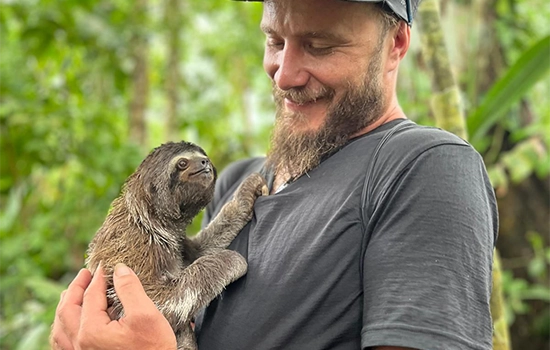
Full Day — No Overnight, Lunch on Board
The one-day program includes no lodging: you leave and return to your Iquitos hotel the same day. It is the branch's only program without an overnight stay. The Amazonian lunch is served fresh on the boat — juane, grilled river fish, tacacho and tropical fruit. It is the option for anyone with a city hotel already booked who wants one day inside the reserve.
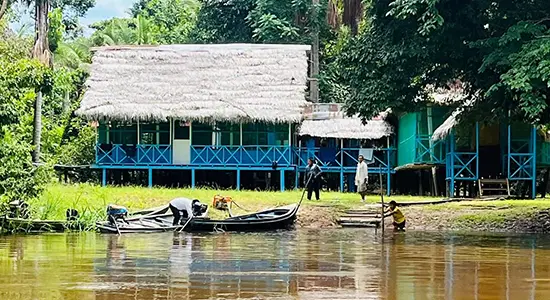
Dolphin Lodge — Three Nights in a Private Room
On the four-day program you sleep three nights at our own lodge, on the Yarapa River, 220 kilometers upriver from Iquitos and inside the buffer zone. Private rooms with Amazonian finishes, permanent purified water, a generator on set hours for charging equipment and a kitchen stocked with regional produce.
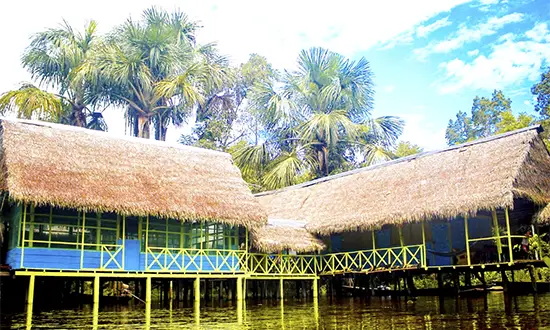
Campsite — One Night in Primary Rainforest
The third night of the four-day program is not spent at the lodge. The crew sets up camp two and a half hours of navigation deeper upriver, with all the equipment provided by us. After dark, the surroundings get explored for caimans, night monkeys and birds; at dawn, the forest chorus works as the alarm clock. It is the program's biggest differentiator.
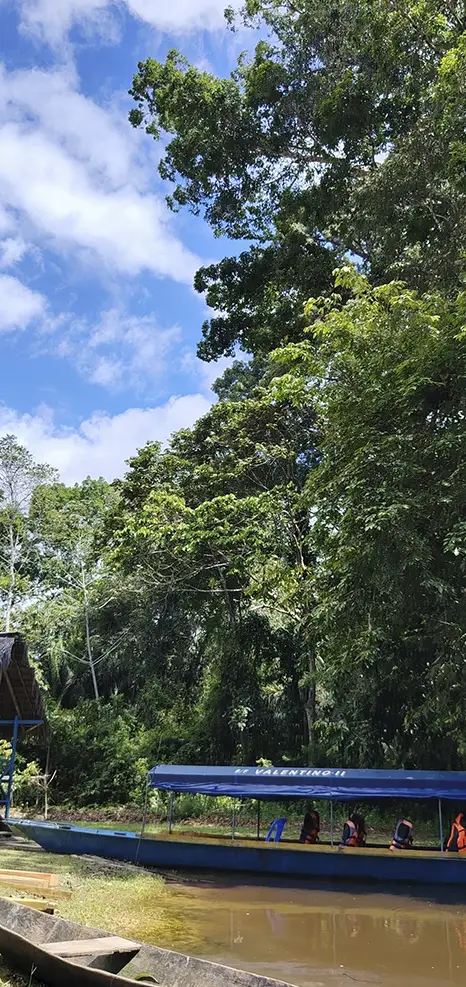
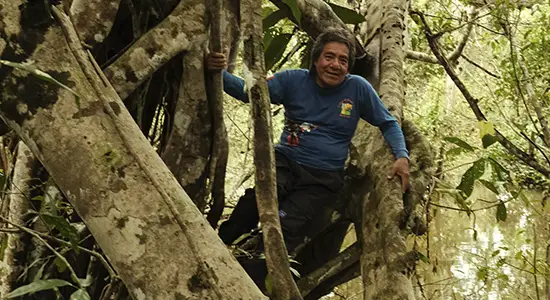
Guides and Crew from the Riverside Communities
The team comes entirely from the surrounding communities. It is no marketing decision: whoever grew up here recognizes a sloth's trail or a night monkey's call in a way no course teaches. Besides, the tourist income stays in the local economy instead of leaving for Lima or an international platform.
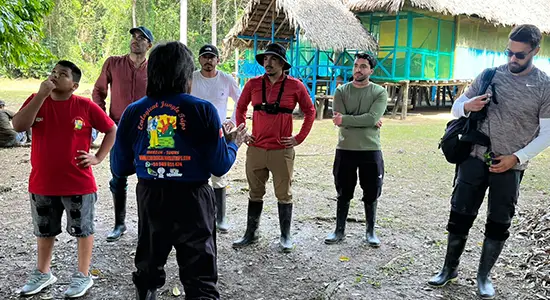
Waste Management and Field Protocols
Every piece of waste generated during the tours, camping nights included, leaves the reserve with us. We leave no plastic in the protected zone, light no fires outside the authorized areas and collect no plants or animals — not even samples.
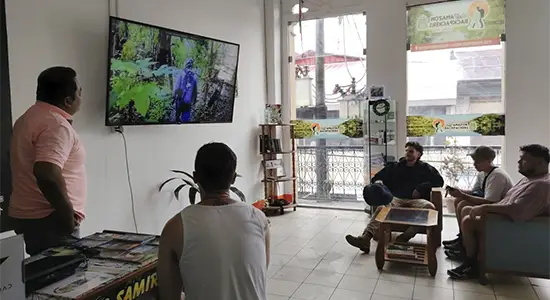
Compliance with SERNANP Regulations
We respect the observation distances, noise limits and navigation routes set by Peru's National Service of State-Protected Natural Areas. That means giving up some photos: we neither chase dolphins nor bring the boat closer than allowed, however much a passenger asks.
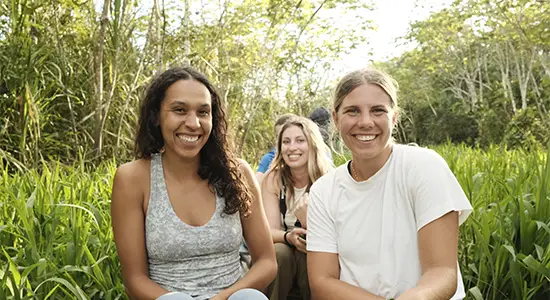
Small Groups by Operational Decision
A maximum of ten passengers per departure, with no exceptions for demand. It is an operational limit before a commercial one: past that figure the boat can no longer enter the flooded forest's narrow channels and the sightings drop. We would rather decline a booking than degrade the experience of those who already reserved.
