
Amazon River Full Day — a Complete One-Day Journey
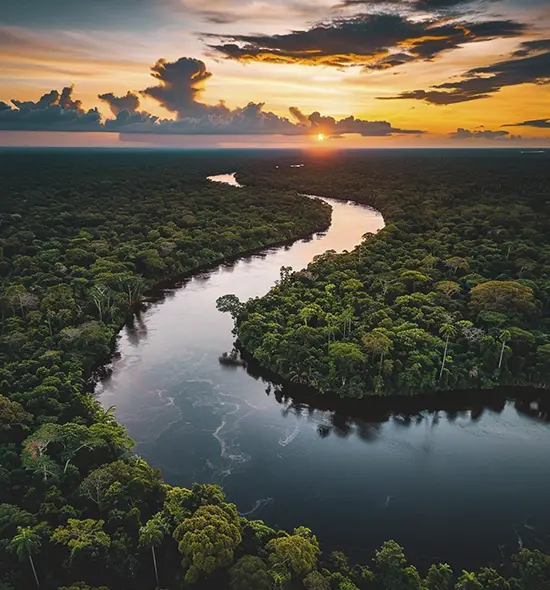
Departing from the port of Bellavista Nanay at 8:00 a.m., the Amazon River full day tour brings you back between 5:00 and 6:00 p.m. You sail to the Nanay-Amazon confluence to watch the meeting of the waters and look for pink and gray dolphins.
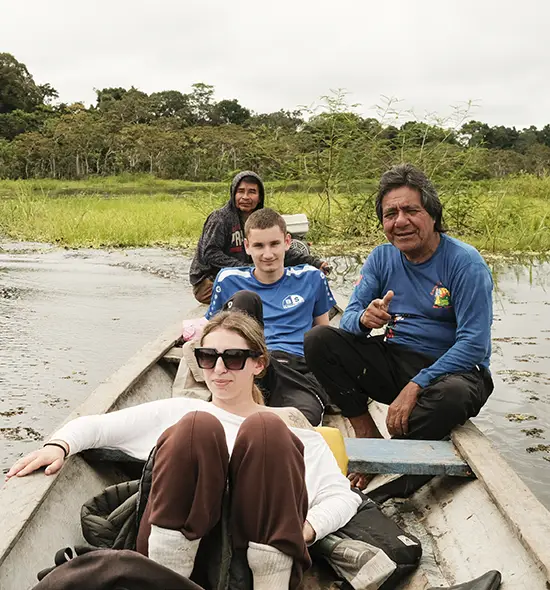
Along the route you visit a native Yagua community, enjoy a buffet lunch of river fish, and stop at Monkey Island and a wildlife rescue center home to toucans, macaws, sloths, charapa and taricaya turtles and anacondas. Hotel transfers, a bilingual guide and all permits come included.
For travelers with only a short stopover in Iquitos, this is the option. Sleeping in the jungle and reaching remote stretches stay out of range, but the region's most recognizable river landmarks are all covered. Rates depend on date and group size: message us and we close your price the same day.
3-Day, 2-Night Tour — the Dolphin Lodge Program
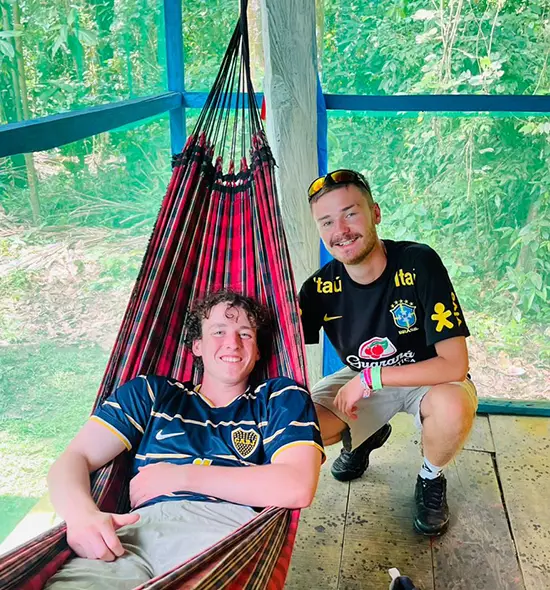
Of all the programs in this branch, the Iquitos 3-day, 2-night tour gets booked the most. A road transfer takes you to Nauta, and from there you sail the Marañón, the Amazon and the Ucayali to the Yarapa, spending two nights in a private room at the Dolphin Lodge.
Inside the program: a deep trek through primary rainforest, traditional piranha fishing, dolphin watching at the confluence, a night canoe outing, a visit to an Amazonian village and one full day of medicinal plants and survival techniques with your guide.
2025-2026 price: 330 US dollars per person in groups of 2 to 10 passengers, or 485 dollars for a solo traveler, everything included from the Iquitos airport. For time invested versus depth of experience, nothing in the catalog balances better.
5-Day, 4-Night Tour — the Black Caiman Program
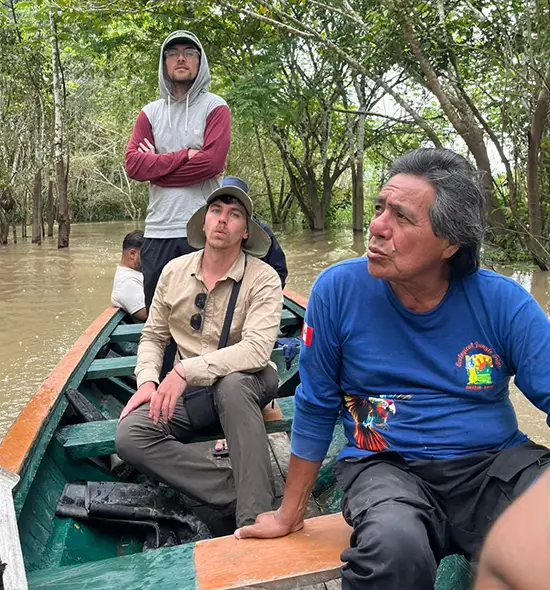
For a complete expedition, the Iquitos 5-day, 4-night tour tops this branch. On top of everything above, it adds a full day of giant trees and birdwatching on the Yarapa, genuine downtime, and one night of camping two and a half hours of navigation deeper into the jungle.
During the campsite's night outing you search for white and black caimans, boas, frogs, night monkeys and endemic insects. Then, on the final day, you navigate remote lakes and lagoons where the Victoria Regia, wild orchids and the pygmy marmoset — the world's smallest primate — make their appearance.
2025-2026 price: 530 US dollars per person in groups of 2 to 10 passengers, or 850 dollars for a solo traveler. Five days give your body time to sync with the forest's rhythm — in three days, that process barely gets started.
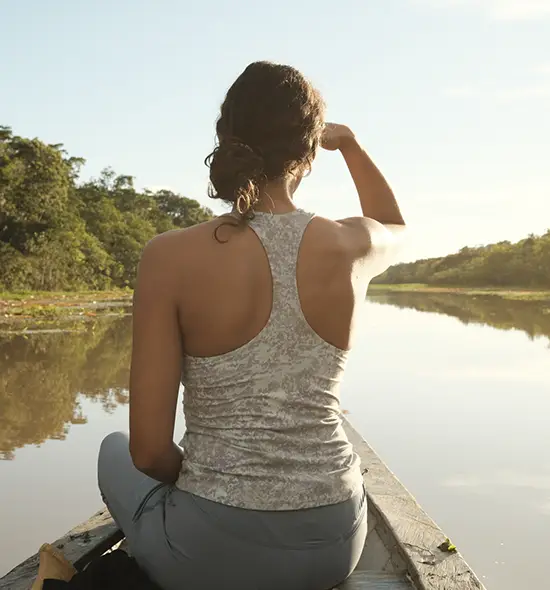
Private, Family and Tailor-Made Departures on This Route
Every program above can also run as an exclusive departure. With the private tour, the guide and boat serve your group alone, departures happen any day of the year, and the pace adjusts as you go — the usual pick for photographers and birdwatchers.
Families choose the family tour, which adapts excursions by age and welcomes children from five years old. Couples get softened pacing and private sunrise outings on the couples tour. And with the custom tour, you start from a blank page: tell us what you want to see and the itinerary gets built around it.
None of these modes alters the water route or the lodge. Group size, departure calendar and the guide's focus are what change.
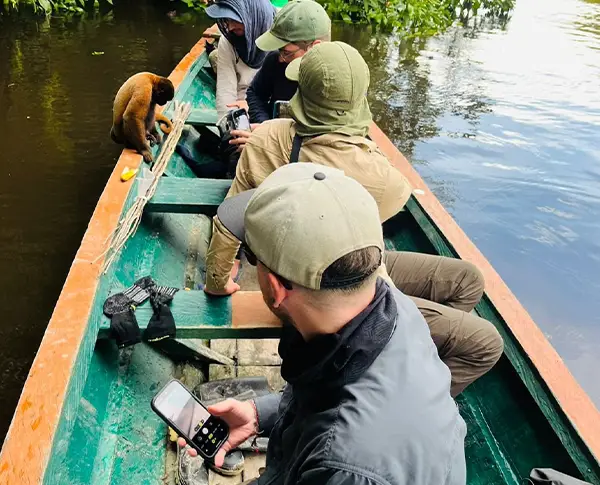
Nanay River — Blackwater at the Gates of Iquitos
Born in jungle terrain, the Nanay drags dissolved organic matter from the forest floor, which dyes its water a dark, tea-like tone. As a blackwater river it carries little sediment, runs acidic, and hosts fewer mosquitoes than whitewater rivers do.
From the port of Bellavista Nanay, it serves as the launch point of the one-day program. Where it empties into the Amazon, the most accessible meeting of the waters near the city appears: a sharp line between dark and brown water that you can follow for several kilometers downstream.
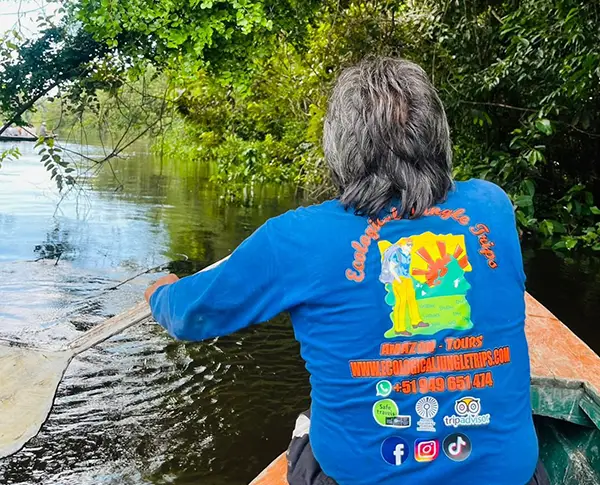
Marañón River — One of the Two Parents of the Amazon
Coming down from the Peruvian Andes, the Marañón arrives loaded with mineral sediment. As a whitewater river it runs cloudy, dense with nutrients, and extraordinarily productive in biological terms. Every multi-day program sails it from Nauta.
Where it joins the Ucayali, the Amazon River is formed. Locals call that point Ucamara: the spot where the Amazon officially starts, and where the route's largest populations of pink and gray dolphins gather.
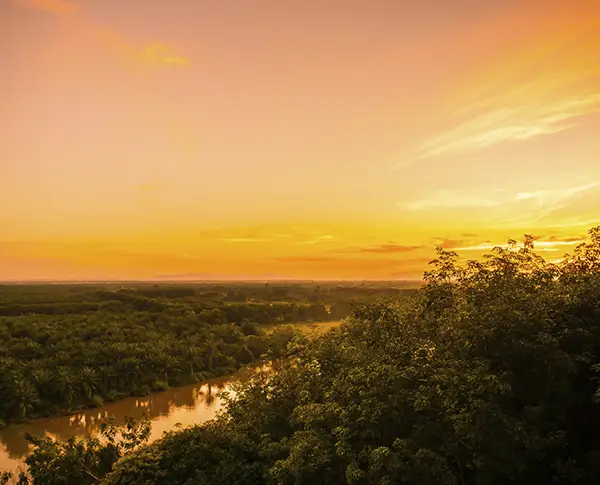
Ucayali River — the Long Arm of the Basin
The Ucayali is the other watercourse that creates the Amazon and, measured from its headwaters, the longer of the two. Like the Marañón it runs white, sharing the huge nutrient load that feeds the region's food chain.
Its banks host the riverside communities we visit on the 3- and 5-day programs. During the outbound navigation to the lodge, this is also where dolphins show up most often — sometimes before you even reach the Yarapa.
Yarapa River — the Tributary Where the Lodge Sits
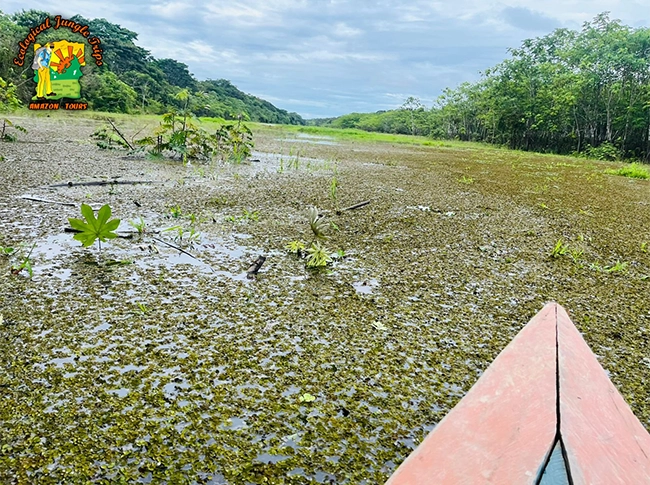
A blackwater tributary inside the buffer zone of the Pacaya Samiria National Reserve, the Yarapa runs narrow compared with the rivers above. That narrowness lets you paddle a canoe through its inner channels and get close to wildlife without engine noise.
Here stands the Dolphin Lodge, 220 kilometers from Iquitos, and here most excursions of the multi-day programs happen: piranha fishing, primary rainforest treks, dawn birdwatching and night canoe outings. Warm and calm, its water is safe for swimming under your guide's supervision.
Group Rate, 2 to 10 Passengers — the Standard Way In
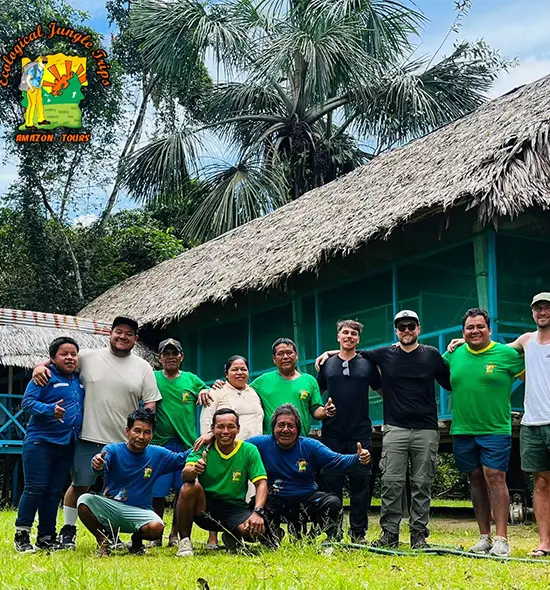
Most bookings arrive through this option. Whether you are two or ten, the per-person rate stays the same, and the group never grows past ten passengers regardless of demand. Keeping that ceiling fixed is what lets small boats slip into the narrow channels of the Yarapa without scattering the wildlife.
2025-2026 rates per person, everything included from the Iquitos airport: 330 US dollars for the 3-day, 2-night program, and 530 US dollars for the 5-day, 4-night program. Because it involves no lodging or full board, the full-day program is quoted separately by date and group size.
To book Amazon River tours from Iquitos with us, a 10% deposit is enough. You settle the balance at our Iquitos office before departure, in cash or by card.
Solo Traveler Rate — No Waiting for a Group
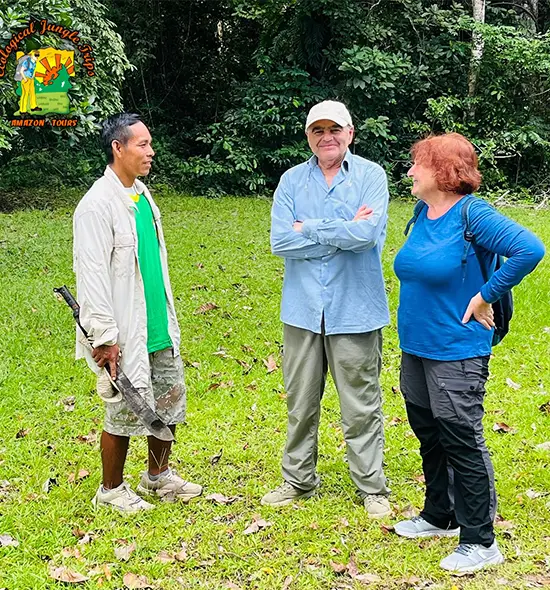
Solo travel to the Amazon happens far more often than people assume, and it should not condemn you to waiting until someone else books your dates. We run the program regardless, with a dedicated guide and boat, even for a single passenger. That rate mirrors the true operating cost: a boat and a guide cost the same to move with one traveler as with five.
2025-2026 rates for one passenger: 485 US dollars for the 3-day, 2-night program and 850 US dollars for the 5-day, 4-night program. Should another traveler join your dates before closing, we tell you ahead of the deposit so the cheaper group rate applies.
All rates on this page are stated in US dollars per person for the 2025-2026 season. Written confirmation always precedes the deposit request, and no surcharges await you in Iquitos.
Pink Dolphin and Gray Dolphin
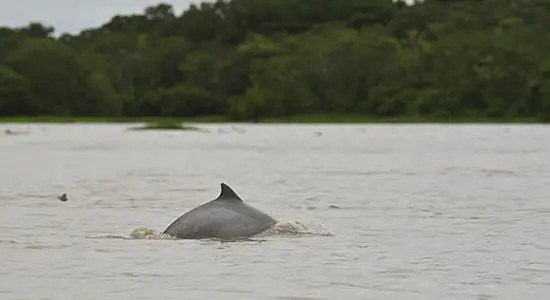
Schools of fish gather where the Marañón and the Ucayali meet, and the pink dolphin (Inia geoffrensis) and gray dolphin (Sotalia fluviatilis) follow them there. Both also appear on the Yarapa. Observation always happens from the boat: swimming with dolphins is not offered, since it stresses a vulnerable species and violates conservation recommendations.
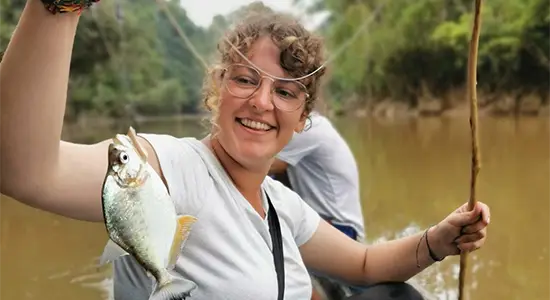
Piranhas, Paiche and River Fish
Using typical local rods, you fish for piranhas in the lagoons near the lodge. Tucunaré, catfish, bujurquis, acarahuazú and sardines often bite as well. These waters are also home to the paiche or arapaima, South America's largest freshwater fish, though spotting one in the wild is uncommon.
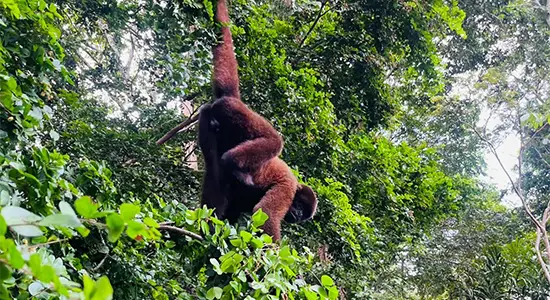
Primates of the Canopy and Understory
Families of howler monkeys, capuchins and squirrel monkeys appear regularly on the primary rainforest treks. Out in the remote lagoons of the longer programs, the pygmy marmoset (Cebuella pygmaea) — the world's smallest primate — sometimes shows itself. Meanwhile, on Monkey Island during the one-day program, spider monkeys, woolly monkeys, titis and tamarins live in semi-freedom.
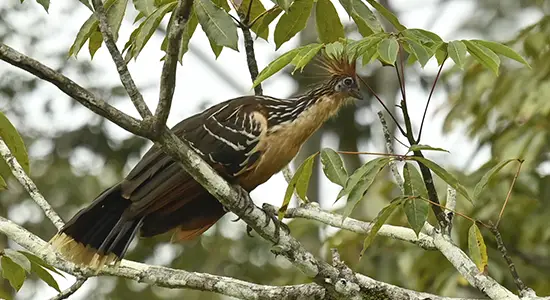
Birds: Macaws, Toucans and the Hoatzin
Dawn on the Yarapa is prime time for birds. Regulars include the Hoatzin (Opisthocomus hoazin), the scarlet macaw (Ara macao), the blue-and-yellow macaw (Ara ararauna), toucans, kingfishers, herons, jacanas and Amazonian tinamous. Serious birdwatchers should pack binoculars.
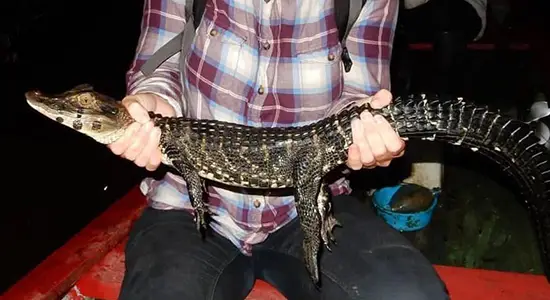
Caimans and Nocturnal Reptiles
Armed with flashlights, the night canoe outings look for white and black caimans: their eyes bounce the beam back and reveal them on the bank. Boas, tree frogs and amphibians of every kind turn up too. Ask our past passengers and this is the activity they remember most — it comes included in the 3- and 5-day programs.
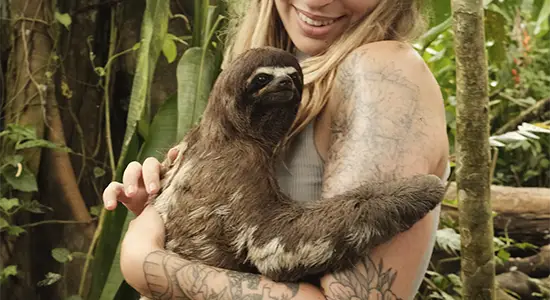
Sloths and Mammals of the Flooded Forest
Hanging from the branches, sloths appear during the navigation toward the campsite on the five-day program. Squirrels and iguanas show up as well, and — with real luck — giant river otters surface in the quietest lagoons. Longer programs raise the odds considerably.
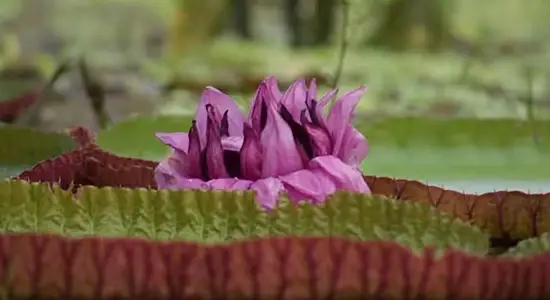
Flora: Giant Trees, Victoria Regia and Medicinal Plants
Along the treks, your guide points out giant trees like the lupuna (Ceiba pentandra), the capirona and the capinurí, together with rubber trees and cedar. Out in the remote lagoons of the five-day program grows the Victoria amazonica, the giant water lily whose round leaves span several meters. An entire day goes to medicinal plants.
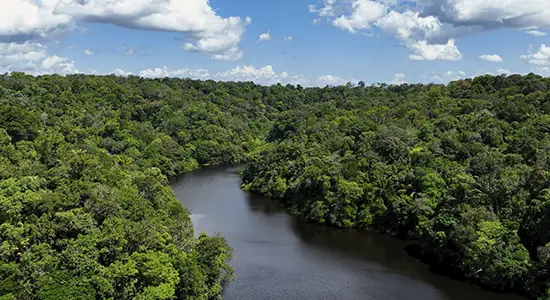
Sunrise
You head out very early, ahead of breakfast, during the forest's busiest window: either a short walk to find primates or a canoe ride through the Yarapa's channels for birds. Which one happens depends on the river level and what your guide detected the day before.
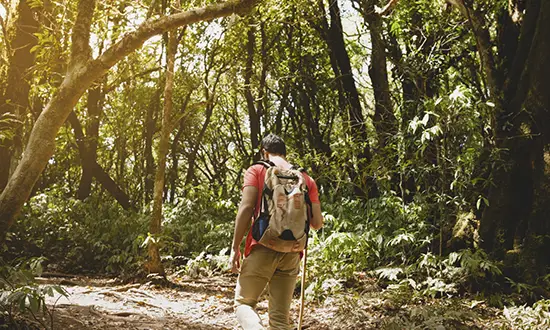
Mid-Morning
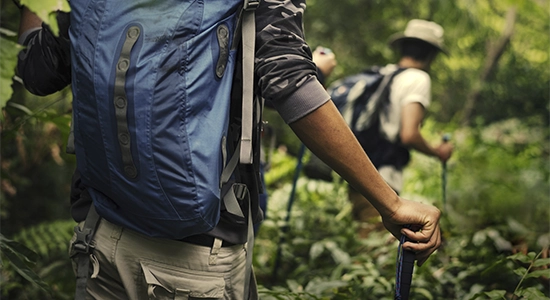
Back at the lodge for breakfast, then out for the day's main excursion: motorboat piranha fishing, a deep trek through primary rainforest, or navigation to a riverside community, according to the day of the program.
Midday
Lunch features regional produce: river fish, plantain, yuca and tropical fruit. Afterward, the hottest hours of the day stay free — the moment most passengers finally understand what hammocks were invented for.
Afternoon
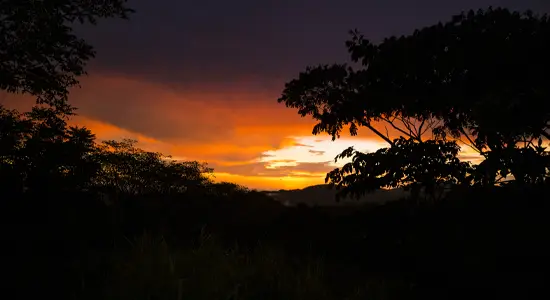
For the second outing: a guided walk on medicinal plants and survival techniques, a swim in the Yarapa, or navigation toward wildlife-watching zones. On the five-day programs, one of these afternoons becomes the departure to the campsite.
Nightfall
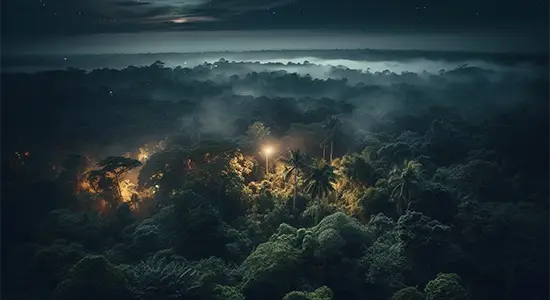
Dinner at the lodge, then — whenever your guide calls it — a night excursion by canoe or on foot. Caimans, frogs, night monkeys and daylight-shy insects come out now. Nobody forgets what the jungle sounds like after dark.
Final Day
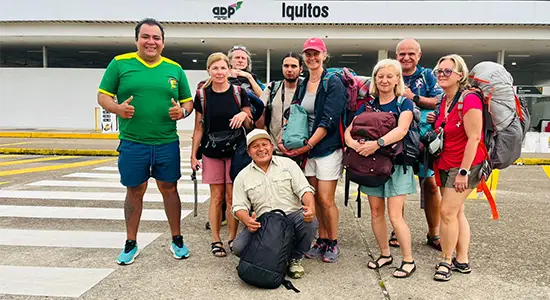
On the last morning: breakfast, one short farewell outing and the return navigation to Nauta, pausing at zones where species you missed might still appear. A road transfer brings you back to Iquitos, ending at your hotel, our office or the airport. Review what to pack for the Iquitos jungle before departure.
Compared with Iquitos City Tours
Urban excursions — the boardwalk, Belén market, Quistococha, the butterfly farm — are interesting and cheap, yet they are not jungle. Half a day inside the city limits covers them. Where those end is exactly where our river tours begin: on the water, with the city gone from the horizon.
Compared with Lodges Close to the City
Some lodges one hour by boat from Iquitos market themselves as an Amazon experience. Comfortable and accessible, yes — but they absorb heavy tourist pressure and their wildlife has turned elusive. Ours sits 220 kilometers out: that costs half a day of travel, and it buys everything else.
Compared with Amazon River Cruises from Iquitos
Amazon River cruises from Iquitos deliver high comfort and continuous navigation, with short outings in auxiliary boats. If comfort tops your list, they are a valid choice. The trade-off is sleeping on the ship instead of in the jungle, treks that stay necessarily brief — and a bill several times higher.
Compared with the Pacaya Samiria Branch
Our other branch, Pacaya Samiria tours, formally enters the protected area under SERNANP permits and brings camping and the Victoria Regia on the 4-day program. This branch, in contrast, puts river navigation and the lodge first. Torn between the two? The full comparison lives in our ranking of the best tours in Iquitos.
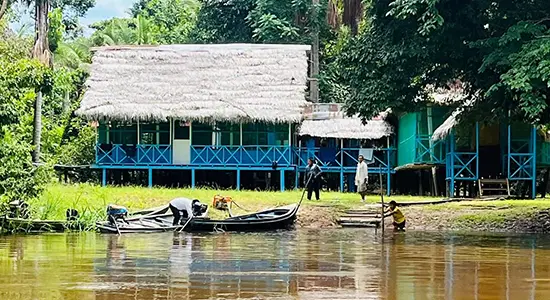
Private Rooms Over the River
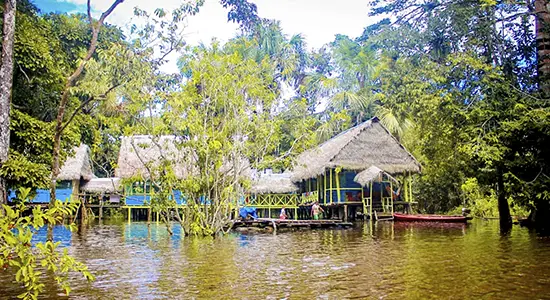
Single, double and triple private rooms make up the Dolphin Lodge, built from local materials with Amazonian finishes. Each one faces the Yarapa River. Rather than a resort, think of a jungle lodge — comfortable and safe, designed so the forest waits on the other side of your window instead of behind a wall.
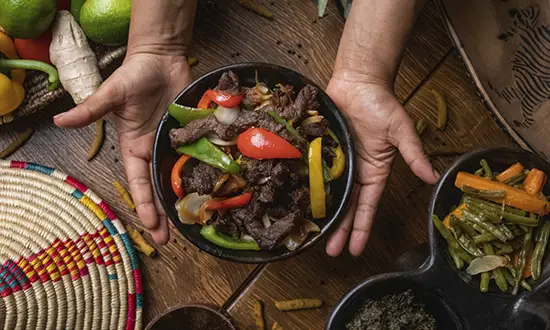
Regional Cooking and Full Board
Breakfast, lunch and dinner come from the lodge kitchen, cooked with regional produce: river fish, juane, tacacho, plantain, yuca and tropical fruit. Vegetarian and vegan menus cost nothing extra if you mention them when booking, and allergies or intolerances get covered with advance notice.
Power, Water and Services
A generator powers the lodge during set hours — plenty for charging cameras, phones and photo batteries. Purified water stays available all day, alongside a complete first-aid kit. Constant mobile coverage does not exist out here: 220 kilometers from the city, disconnection comes with the product.
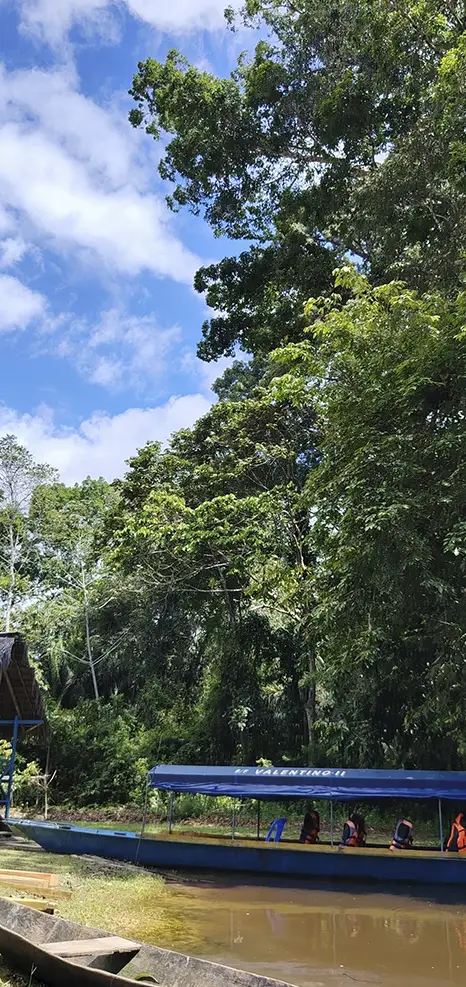
Boats and Safety Equipment
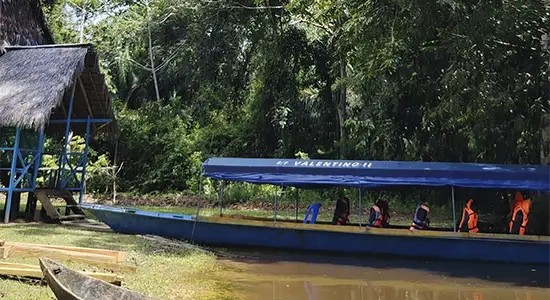
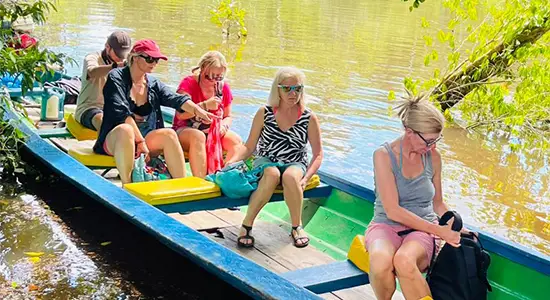
We sail in covered, motorized local boats built for the region's rivers, each stocked with life jackets for every passenger and full safety equipment. Canoes take over in the narrow channels of the Yarapa, letting you approach wildlife with no engine noise at all.
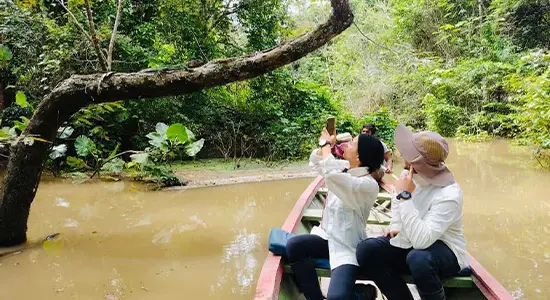
Crew and Local Guides
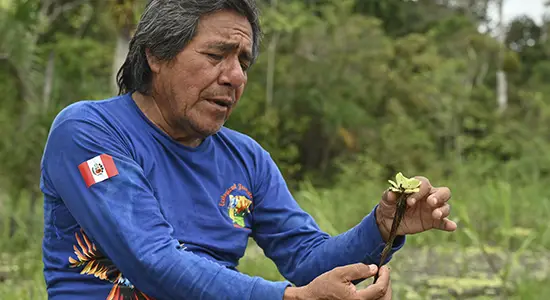
Our guides hold official licenses, speak Spanish and English, and were born in the communities of the Yarapa River. Our boat drivers read the riverbed, the sandbars and the river's moods in high and low water. That kind of reading is not taught in any course — it is inherited.
Small Groups by Operational Decision
Ten passengers per group is the ceiling, with zero exceptions for demand. The limit is operational, not commercial: past that number, the boat can no longer enter the narrow channels and sightings collapse. Turning down a booking beats degrading the experience of everyone who already reserved.
The Operator Behind the Tours
Ecological Jungle Trips has operated since 1999, founded by Alex Weill Rengifo, a licensed Official Tourism Guide born in Iquitos. We hold the international SAFE TRAVELS stamp from the World Travel & Tourism Council. Before wiring a deposit to any Amazon operator, always request the agency's registration and the guides' certification — ours arrive in writing on request.
